This document has been compiled by the South African Garlic Growers Association and while every effort has been made to ensure the accuracy of the information herein, it is still an overwiev on the process of garlic production. A more comprehensive booklet is available from the Agricultural Research Station at Roodeplaat, Pretoria. Follow the link www.arc.agric.za to order. Title of the book is Guide to Garlic Production in South Africa. Information also available at www.daff.gov.za/publications under the title Production guidelines for Garlic.
This document provides information on the types of garlic grown in South Africa, garlic production from planting to storage, and pest control and weed management.
The majority of South-African-grown garlic is sold to the fresh market as whole, fresh bulbs or green garlic. Processed products such as garlic spreads, chopped garlic and bottled garlic in different forms are also sold, but to a lesser extent. Garlic is a cool-season crop; it is planted in the fall and harvested the following summer.
Types of garlic
Garlic (Allium sativum) belongs to the Alliaceae family, the same family as onions, shallots and leeks.
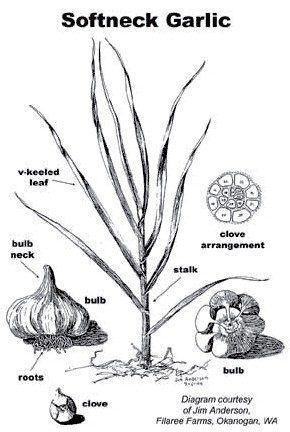
Two types of garlic are grown throughout the world namely the "hard neck-" and "soft neck" – types. Of each type many cultivars exists. Soft neck garlic is the most commonly found and its botanical name is simply allium sativum var. sativum.
Almost all supermarket garlic is a soft neck variety. This is because soft neck garlic is easier to grow and plant and also keeps for longer than hard neck. Garlic. Soft necks are recognized by the
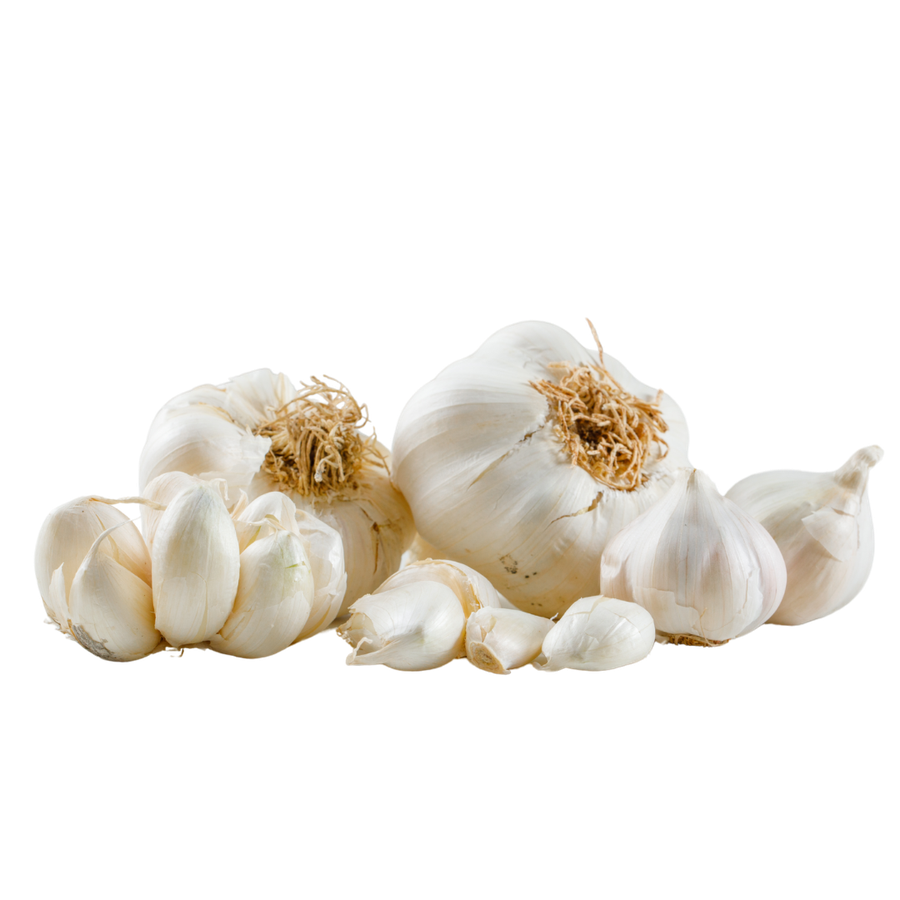
white papery skin and an abundance of cloves, often forming several layers around the central core. The flexible stalk also allows soft neck garlic to be formed into garlic braids (plaits).
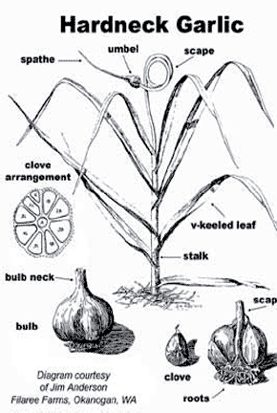
Hard neck garlic is technically known as the ophioscorodon variety of allium sativum. The name possibly originates from the Greek "ophis" meaning "snake". Hard neck garlics have a "scape" – stalk – which coils from the top. On the top of this scape grow a number of bulbils which are often mistakenly referred to as garlic flowers. Hard neck garlics have fewer, larger cloves than the soft necks. They also have less of an outer bulb wrapper, sometimes none at all. This makes them more sensitive and reduces their shelf life. Nobody has ever done a detailed analysis of different "varieties" of garlic grown by producers in SA, but all garlic grown in SA will fall into one of these groups.
Most of the garlic planted in South Africa is of the Soft neck types. Different "varieties" of soft neck garlic were developed over time by SA Producers because microclimate and farmers’ selection of planting stock played a major role in the development of these "varieties". Garlic planted in different parts of the country, is commonly known in folklore as Egyptian White, Egyptian pink or Small pink
Regardless of type, cultivated garlic plants do not produce true seed; therefore, no crossing or exchange of genetic material occurs between strains of garlic. All garlic is propagated vegetatively from cloves or bulbils, with each clove or bulbil being a clone of the parent plant.
Planting
Planting
In the northern, summer rainfall areas of South Africa planting is done from February to April. Mid-April to mid May suits the producers in the Southern areas
In the northern, summer rainfall areas of South Africa planting is done from February to April. Mid-April to mid May suits the producers in the Southern areas better.
Healthy seed stock should be stored as whole bulbs until shortly before planting, since cloves separated from the parent bulb deteriorate quickly. Dry bulbs are more easily broken apart into cloves than damp bulbs. Garlic can be cracked by hand or mechanical devices. However, there is greater potential for physical damage to cloves when mechanically cracked. Cloves should be graded into sizes or weight ranges for improved planting efficiency.
The amount of planting material required will vary from 700-1,000 kg bulbs per ha. The spacing of the cloves, and the eventual size of the individual cloves planted will determine the final amount of cloves to be used. Space plants 7-12 cm apart in the row. Spacing between rows will depend on the method of planting and available equipment for cultivation. Single or multiple rows of plants are commonly used with spacing of at least 20 cm between rows.
As a general rule of thumb a plant density of 45 to 55 plants per square meter seems to be the ideal, no matter what method of cultivation is used.
Cloves should be planted to the depth of about 50 mm on raised beds or flat ground preferably with the root end down. Although cloves planted upside down will develop, they often have a curved shoot and misshapen bulbs. Furrows should be closed directly after planting with the first irrigation as soon as possible.
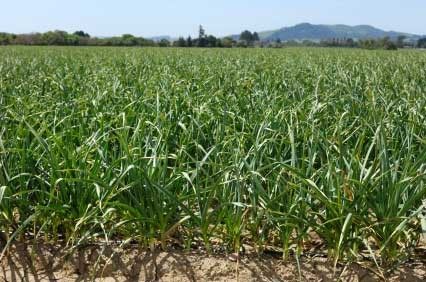
A strong, well-established over wintering plant will rapidly develop shoot growth during spring as soil and air temperatures increase. With adequate moisture and nutrition, a large plant will develop before bulbing takes place.
Soil Preparation
Garlic can be grown successfully in a wide range of soil types and is grown in most cultivated areas of South Africa. Soils with high organic matter content are preferred, due to their increased moisture- and
Garlic can be grown successfully in a wide range of soil types and is grown in most cultivated areas of South Africa.
Soils with high organic matter content are preferred, due to their increased moisture- and nutrient-holding capacity. Soils containing sufficient organic matter are also less prone to crusting and compaction. Very heavy soil types hinder bulb expansion, especially if allowed to dry out, resulting in rough and irregular shaped bulbs. Intensive soil management practices are required on light sandy soils due to their low moisture-holding capacity.
The soil should be prepared far enough in advance in order to eliminate perennial weeds, adjust pH, nutrient and organic matter levels if needed, and remove any soil obstructions. Ploughing should be to the depth of 15 to 20 cm. It can then be harrowed and left in good tilth. The surface should be well worked and smooth. If the area of production will be under irrigation, then the soil should be leveled to allow proper and effective irrigation.
Garlic grows well on fertile soil; however, fertilizer recommendations for garlic from a reputable fertilizer company should be obtained. Verify the soil phosphorus and potassium levels with a soil test. Broadcast any required phosphorus or potassium followed by shallow incorporation into the soil before planting. The amount of nitrogen required will vary with soil type, the previous crop grown, the amount of organic matter present and the climatic conditions during the growing season. Depending on soil type and organic matter content, it is generally accepted that garlic requires between 56-110 kg N/ha.
Plant development
After planting, cloves use reserves in the fleshy bulb scale to form roots, and for sprouting of the leaves. The plant becomes dependant on the green leaves for growth as the season progresses and the bulb scale is depleted.
After planting, cloves use reserves in the fleshy bulb scale to form roots, and for sprouting of the leaves. The plant becomes dependant on the green leaves for growth as the season progresses and the bulb scale is depleted. The pseudo bulb then consists of leaf bases, leaves, a growth tip, a basal plate and roots. The outer leaf basis eventually forms the dry sheath surrounding the mature bulb.
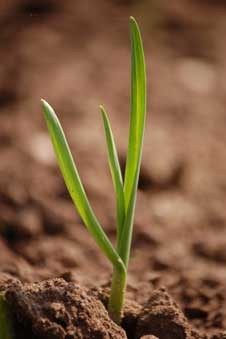
Sprouting takes 10 to 20 days after planting. Adventitious roots form and leaves emerges. The size of the garlic bulb at the end of the season depends on the vegetative growth before exposure to low temperatures. The more and the better the quality of the leaves, and the leaf surface, the better the quality and size of the bulb will be.
Shoot growth happens continuously from the end of sprouting until 140 days after planting when maximum leaf growth is reached.
Bulb formation is a function of adequate vegetative growth at moderate temperatures at the beginning of the season, a period of vernalisation (exposure of the plant to low temperatures) during mid season, and a higher temperatures and longer days during the latter part of the season. Bulb induction happens as early as 90 days after planting, with bulb initiation at about 120 days and bulb filling at 140 days after planting.
Irrigation
Garlic can be successfully grown using furrow, sprinkler, or drip irrigation. Garlic has a relatively shallow root system and it is therefore sensitive to moisture stress throughout the growing season. Periods of dry soil conditions, especially during bulbing, will result in yield reductions.
For most soils, approximately 25mm of water per week is required during the growing season. In sandy soils, however, 50mm or more of water may be required
Garlic can be successfully grown using furrow, sprinkler, or drip irrigation. Garlic has a relatively shallow root system and it is therefore sensitive to moisture stress throughout the growing season. Periods of dry soil conditions, especially during bulbing, will result in yield reductions.
For most soils, approximately 25mm of water per week is required during the growing season. In sandy soils, however, 50mm or more of water may be required during hot, dry weather conditions.
The preferred time of irrigation is morning to mid-afternoon, thus allowing sufficient time for the plant foliage to dry before nightfall. Stop irrigating when garlic becomes mature and ready to harvest. This will increase harvesting ease and reduce the potential deterioration and staining of exterior bulb sheath leaves.
Harvest
Bulbs continue to size during late spring and summer until the leaves of the plant begin to dry, turning tan brown from the tips toward the base of the leaves. Begin harvesting when 30%-50% of the leaves have died back. Garlic bulbs harvested too early may be immature and tend to shrivel when cured, while late harvested bulbs may have stained, partially decayed wrapper leaves and/or exposed cloves.
With small plantings of garlic, the bulbs are
Bulbs continue to size during late spring and summer until the leaves of the plant begin to dry, turning tan brown from the tips toward the base of the leaves. Begin harvesting when 30%-50% of the leaves have died back. Garlic bulbs harvested too early may be immature and tend to shrivel when cured, while late harvested bulbs may have stained, partially decayed wrapper leaves and/or exposed cloves.
With small plantings of garlic, the bulbs are usually harvested by hand pulling, using a fork to loosen the soil and facilitate lifting. On larger plantings, the potato digger or a small onion plough can be used to lift the garlic crops.
After lifting, the crops should be cured. Curing is the process of drying the bulb to help increase storage life by minimizing microbial and fungal infection and water loss. Leave harvested garlic in the field to cure for a couple of days or remove it from the field immediately and cure it in storage. To cure garlic in the field, place plants in covered, slotted vegetable bins and allow natural air drying. To cure in storage, tie 10-15 plants into a bundle and hang to dry in a well-ventilated area or use forced air to dry the bulbs. Once cured, trim or remove garlic tops and roots and place the bulbs in slotted bins, on wired racks, or on open trays in a well-ventilated building.
Storage
Storage conditions depend on the end use. Garlic for consumption (table stock) can be stored differently than garlic for planting stock. Garlic for table stock is best stored at 0°C-4°C with a relative humidity of 60%-70%. Adequate air circulation and proper storage containers are important to remove transpired heat and moisture. As storage temperatures increase above 0 °C, the rate of bulb weight loss also increases. Garlic stored under suitable conditions will last for 6-7
Storage conditions depend on the end use. Garlic for consumption (table stock) can be stored differently than garlic for planting stock. Garlic for table stock is best stored at 0°C-4°C with a relative humidity of 60%-70%. Adequate air circulation and proper storage containers are important to remove transpired heat and moisture. As storage temperatures increase above 0 °C, the rate of bulb weight loss also increases. Garlic stored under suitable conditions will last for 6-7 months depending on the strain of garlic.
Avoid storing in higher humidity, as it creates an excellent environment for penicillium mould and root growth. Table stock stored at room temperature may dehydrate faster. Store garlic intended for planting stock at anywhere from 10°C to room temperature with 60%-70% relative humidity.
Pest Control and Weed Management
The size of the harvested bulb is a result of a strong and healthy plant. There are a number of pests of garlic in South Africa with an effect on the growth of the garlic plant.
Fusarium basal plate rot attacks the basal plate region of the bulb and roots. This soil-borne pathogen invades the roots, resulting in empty, tan-colored, non-functional roots, while the basal plate region may develop a pinkish-brown growth of mycelium. Above-ground symptoms include yellowing of the leaf tips and dieback of the shoot during the spring. Warm soil temperatures and high soil moisture promote disease development. Since the organism survives as dormant spores in the soil or on plant residue, rotate with non-allium crops.
Penicillium mould is the main cause of decay of garlic in storage. The disease appears as masses of blue-green growth usually first seen at the base of the bulb. The primary source of inoculum is diseased bulbs used for planting material. When diseased bulbs are cracked, healthy cloves may be contaminated with airborne spores. Wounded cloves are particularly susceptible to this disease.
Infected cloves are often invaded by secondary decay organisms such as bacteria and other fungi, masking the original pathogen. Clove rot and reduced plant stands are often the result of planting infected cloves. Warm temperatures (22°C-25°C) are optimal for spore germination and disease development. Planting garlic too early in late summer when soil temperatures are high may increase the severity of clove rot. Irrigation may be beneficial, as high soil moisture appears to suppress clove decay.
Bulb and stem nematode is a microscopic parasitic nematode that enters garlic through the roots or wounds on bulbs. Early in the season, young seedlings infected with nematodes are often stunted, with yellowing and bloating of young leaves. Later infections can cause twisting of new growth, bulb softening and desiccation, and loss of roots (Figures below). Bulb and stem nematode becomes active in the spring with damage symptoms generally appearing mid-July through harvest. The key to management of this pest is prevention. This means planting nematode-free seed into nematode-free soil. Test your soil before planting, use clean seed and follow a 3-year rotation with non-host crops. Once in the soil, bulb and stem nematode can be spread though irrigation water, on contaminated seed, equipment, humans and animals.
White rot is a soil-borne fungal disease that can survive as sclerotia in infected fields for decades. It is a serious concern, particularly in cool, wet growing seasons. Symptoms of white rot of garlic include a yellowing, wilting and toppling over of older leaves, watery bulbs and the presence of a fluffy, white mycelium and pinhead-sized black sclerotia, as well as rotted roots. Because sclerotia and mycelium over winter in soil and plant debris, thorough cleaning of field equipment and proper disposing of cull garlic is important in preventing the spread of white rot to uncontaminated fields.
Virtually all sources of garlic contain viruses, though most are latent (dormant). Latent garlic viruses may not become visible or reduce yields until the garlic plant is stressed or growth is interrupted. The most common symptoms of virus infection are colour changes of the leaves. These include mosaics, flecking, streaking and mottling. Leaf shape distortion may also occur.
Botrytis leaf spot occurs on onions. White sunken spots on leaves are usually the first sign of infection; spots are small -0.5mm to 6mm long - and tend to be oval. They sometimes have a light green halo and may appear water soaked. The epidermis around the spots may be silvery. When numerous spots are present, leaf tips die back and whole leaves may be killed.
Botrytis cinerea spores land on leaf surfaces and, in the presence of moisture, germinate and produce enzymes that kill leaf tissue. The fungus damages the leaf by causing leaf spotting. Leaf surfaces must be wet by dew or rain for long periods (20 or more hours) for leaf spot to develop. Optimum temperature for germination of spores is 15°C ; optimum temperature for mycelia growth is in the mid 20°C 's.
Isolate seed fields from fresh market or processing onion fields as bulbs are a major source of spore inoculum. To reduce the level of inoculum in the soil, use a 3-year rotation scheme away from Allium crops and destroy volunteer and cull onions during this period. Monitor fields and apply a treatment at the first evidence of leaf spotting.
Downy mildew can infect both onions and garlic. The first evidence of disease is a fine, furry, grayish white to purple growth on the surface of older leaves. Leaf tissue under the growth becomes pale green, then yellow, and finally collapses. Large, yellowish, circular clumps of infected plants, a few too many feet in diameter, may be the first symptom noticed in the field. The yellowing patterns often enlarge in the direction of prevailing winds.
Downy mildew can develop from an initial infection by airborne spores into an epidemic very quickly if humidity and temperature conditions (1.5 to 7 hours of leaf wetness and 6°C to 26°C) are favorable. Spores can travel long distances in moist air, but are quickly killed by dry conditions. Initial sources of disease can be infected bulbs, sets, seeds, and plant debris.
Use disease-free bulbs, sets, and seed. Use a 3-year rotation away from Allium crops in fields where the disease has occurred. Destroy volunteer Allium plants in and around the field and buildings. Locate fields where there is good air movement to promote rapid drying of foliage.
Spray at the first sign of disease; fungicides may be applied on a 7-day schedule, if necessary. For all fungicides, thorough coverage of foliage is important in the control of downy mildew.
Purple blotch and Stemphylium leaf blight occur primarily on onions and garlic as oval-shaped tan and deep purple lesions on leaf blades. Yellow streaks, which turn brown, extend along the blade in both directions from the lesion. In advanced stages lesions may girdle and kill leaves. Concentric
Symptoms are identical for both diseases and they are managed in the same manner. These diseases are favored by heavy dew in desert areas and by foggy and rainy weather in other regions; optimum temperature for disease development is in the mid 20°C's. The spores are airborne. These diseases are often associated with downy mildew lesions on onions; they occur less commonly on garlic.
Treatment for downy mildew also controls purple blotch and Stemphylium leaf blight. These diseases are usually not a problem after the end of the rainy season
Rust is primarily a disease of garlic, although onion, leeks, shallots, and wild species of Allium are hosts. Small, reddish to dull orange oval-shaped pustules develop on leaf blades. Reddish airborne urediospores are copiously produced within the lesions. Later in the growing season, the lesions may appear dark because black teliospores develop within the pustules. Heavily infected leaves turn yellow and may collapse prematurely. When infection is severe, bulb size and quality are reduced.
Rust is a sporadic disease that generally causes little or no economic damage. Since 1998, however, rust has caused severe damage in some garlic-growing areas. Apparently, the disease only damages onions when they are planted next to a heavily infected garlic field. The fungus probably over winters on garlic and volunteer Allium crops.
Rotate away from Allium crops for 2 to 3 years and destroy volunteer Allium plants during this period. Fungicides may be warranted if more than a few pustules develop on plants.
Thrips are very small, slender insects that are best seen with a hand lens. Mature onion thrips are about 1.3 mm long. Adults are pale yellow to light brown in color. The immature stages have the same body shape as adults but are lighter in color and are wingless.
Onion thrips has a very extensive range of hosts, including cereals and broadleaved crops. They are a problem on garlic, but generally are not as serious a pest as they are on onion. Onion thrips thrive in hot, dry conditions and are usually more damaging in areas where these climatic conditions prevail for most of the production season.
High populations of thrips can reduce both yield and keeping quality of garlic. Thrips are most damaging when they feed during the early bulbing stage of plant development. It has rasping-sucking mouthparts and feed by rasping the surface of the leaves and sucking up the liberated plant fluid. They feed under the leaf folds and in the protected inner leaves near the bulb. When population levels are high, thrips can also be found feeding on exposed leaf surfaces. Both adults and nymphs cause damage. When foliage is severely damaged, the entire field takes on a silvery appearance. Severe scarring also creates an entry point for foliar leaf diseases.
Natural enemies are very susceptible to insecticide sprays, however, and may not be important in fields where insecticides have been used.
Avoid planting onions near grain fields, if possible, because thrips numbers often build up in cereals in spring. Overhead irrigation and rainfall provide some suppression of thrips populations, but treatments are often still necessary.
Although thrips feeding during the early bulbing stage is the most damaging to yields, thrips must be controlled before garlic reach this stage so that populations do not exceed levels that can be adequately controlled. Garlic can tolerate higher thrips populations closer to harvest.
To make a cursory evaluation of thrips infestation levels, randomly sample leaves and evaluate thrips numbers and damage under leaf folds. A far more reliable means of evaluating thrips populations, however, is to randomly sample entire plants. This way leaves can be pulled apart and, using a hand lens, all the thrips on the inner leaves near the bulb can be counted as well as those under the leaf folds. Sample at least five plants from four separate areas of the field. A reliable treatment threshold has not been developed; however, a threshold of 30 thrips per plant mid-season (lower for very young plants and higher for larger mature plants) has been used successfully for dry bulb fresh market and drying onions, and also for garlic
Resistance to organophosphate insecticides has been documented in some parts of the world. For this reason, alternate insecticides from different chemical families when multiple treatments are needed during a season. Thorough coverage is essential for control, as most thrips feed in protected areas of the plant.
Garlic is a weak competitor against vigorous weeds. Weed management is essential and can be undertaken by cultivation, hand hoeing, mulching or with herbicide applications. Avoid deep cultivation close to the plants, as root damage and subsequent yield losses may occur. For up-to-date weed control
The aim of this article is not to give a prescriptive recipe or fertilizer program, but rather to discuss why nutritional problems may occur, what role the nutrients play in plant growth and production and what can be done, and when, to prevent or rectify a problem.
1
Why do nutrition problems occur?
Ideally, plants should be able to take up all their nutritional needs from the soil. However, there are several factors that play a role in reducing the availability of these nutrients; they include:
A
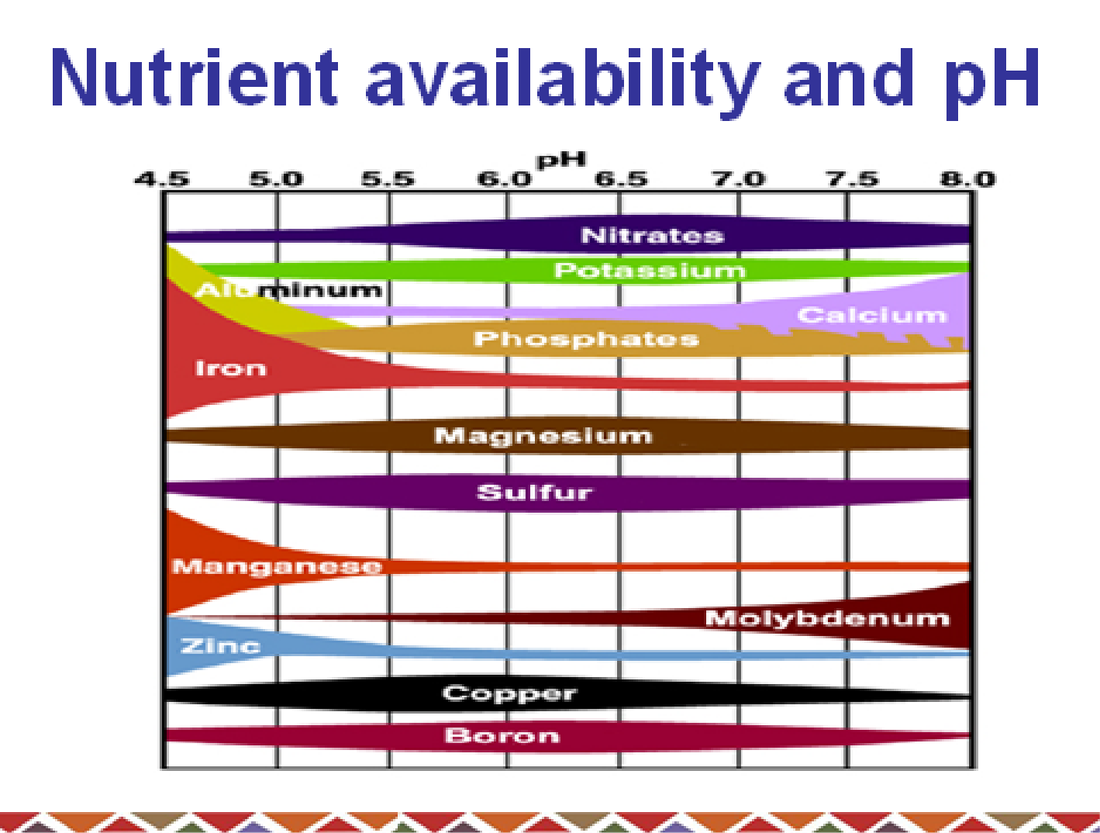
Soil pH: the optimum pH for nutrient availability is approximately pH( KCl) 5.5-6.5. Any variation from these levels may lead to nutrients becoming more or less available. It is generally accepted that in high pH soils, micronutrients become less available, whereas the same micro nutrients tend to be more available under low soil pH conditions. There are exceptions to this; molybdenum tends to show a reverse reaction, whilst phosphate becomes less available under both higher and lower pH conditions. The well known graph below illustrates well the influence of pH on nutrient availability.
Fig 1. Effect of pH on nutrient availability
B
Soil temperatures play an important role; e.g. phosphate and zinc are good example of nutrients which are less available in the early season when soil temperatures are still cold.
C
Soil type: Sandy soils generally have less holding capacity, resulting in possible nutrient insufficiencies. Clay soils tend to have higher nutritional levels and are hence less problematic.
D
Crop sensitivity: Crops, and even varieties within crops, may have different nutrient requirements. Understanding the crops’ requirement helps determine which nutrients are important and that they are not
E
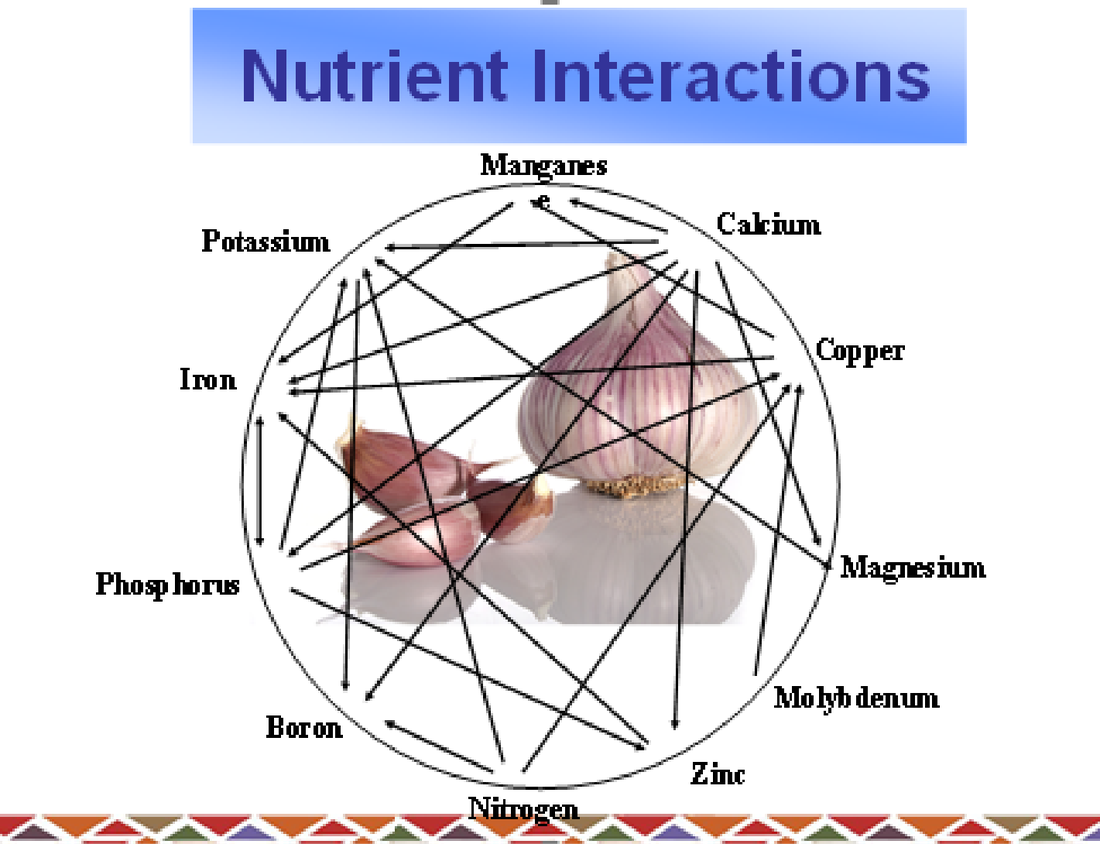
Nutrient interactions: certain nutrients have an antagonist effect on others for plant uptake whilst other nutrients may have a complimentary effect. Understanding these nutrient interactions, often induced through fertilizer applications, may limit the occurrence of nutrient problems in the soil. The well known diagram below illustrates these interactions.
Fig 3: Mulders chart illustrating the antagonistic and synergistic interactions of nutrients in the soil.
F
Many other factors that may influence nutrient availability and include soil moisture, soil compaction, root damage (physical and chemical), drought, concentrated fertilizers and humidity levels.
When one or more of these above mentioned factors negatively influence the soil availability of the nutrients, it is often effective to apply the nutrient as a foliar application, thereby improving the availability and uptake of the nutrient.
2
The Role of nutrients in garlic
Although all 12 essential nutrients are required throughout the growth of a plant, each nutrient has a specific role to play in the growth processes in the plant. Understanding what the role is and ensuring that the nutrient is not limiting at the period when it exerts most influence on the growth processes can help optimize growth and production of the crop. Below are brief summaries of the functions of the nutrients and the growth stage at which they are most critical.
Foe ease of discussions, the 12 essential nutrients are usually grouped into three categories:
Macronutrients: so named because the quantities required by the plant are generally large.
Macronutrients: so named because the quantities required by the plant are generally large.
Micronutrients: they are as important to the crop as the macro or secondary nutrients, but are required in significantly less amounts than either of the other two groups.
D
Functions of nutrients and timing for macronutrients, specific to garlic:
Nitrogen is generally regarded as the nutrient that has greatest influence on yield and production. It is required throughout the growing season, but generally required in larger quantities early season to ensure optimum leaf and root growth. Peak nitrogen uptake is during early bulb growth.
Phosphate plays an important role in root growth, energy production and cell division. Its also been shown that where phosphate is adequate, there is reduced weight loss and reduced rots. Within the matured plant, cloves and bulbs contain the highest final concentration of phosphate. Phosphate deficiencies may occur in high or low pH soils and in cold wet soils.
Potassium influences bulb size, clove quality and disease resistance. It assists in the crops’ ability to withstand drought and increased cold resistance. It plays a role in carbohydrate movement in the crop and therefore important in the late season for bulking. Deficiencies can occur in dry soils, low potassium soils and where there is an imbalance of cations in the soil.
E
Functions and timing of the secondary nutrients:
Calcium is an important component of the cell wall and influences storage quality. Uptake is maximum during bulb formation and early bulb growth. Deficiencies may occur where there are imbalances in the soil, under drought conditions and or in low pH soils.
Magnesium is central to the chlorophyll molecule and important throughout the crops growth. Deficiencies may occur where there are nutrient imbalances, acidic soils and low magnesium levels.
Sulfur is an important nutrient in garlic production, influencing taste and pungency of the bulbs. The majority of uptake occurs during bulb maturity. Deficiencies may occur in sandy soils and regions with low sulfur emissions.
F
Functions of and essential timing for micronutrients
Boron is essential for root and new shoot growth and affects yield and storage quality. It is needed throughout the growing period, but is especially important early season and during the phase of calcium uptake. Deficiencies may occur in high and low pH soils, sandy leached soils and in soils where nitrogen levels are very high.
iCopper is important for lignifications and plays an important role in bulb skin and scale development and in skin colour. Deficiencies may occur in soils naturally low in copper, high phosphate soils, soils with high organic matter or high nitrogen levels or where antagonism from metal cations may interfere with copper uptake.
Iron is important for chlorophyll formation and photosynthesis. It is therefore required throughout the season. Iron deficiency may occur in high pH soils, where poor quality water is being applied and where soil phosphate levels are high and high zinc and or manganese soil levels occur.
Manganese is important for chlorophyll formation and in respiration as well as skin colour. Garlic is susceptible to manganese deficiencies, which generally show up as interveinal chlorosis and stunted plants with thick necks on the bulbs. Manganese deficiency may occur in high pH soils, lightly fluffy soils and where lime has been recently applied and or dry soils as well as sols with high organic matter, high iron and or high nitrogen soil levels
Molybdenum is important for the metabolism of nitrogen in the crop. Molybdenum deficiencies are common in acidic soils and sandy soils with low organic matter.
Zinc is important for growth hormones, including auxin. Zinc is especially important in young developing plants and root and shoot growth and internode extension. Adequate zinc has been shown to improve bulb yield. Zinc deficiency can be seen in high pH soils, soils with high phosphate levels and in cold wet soils.
3
Identifying nutrition problems
There are three common ways of identifying nutrition problems:
A
Historical knowledge and experience of a area
B
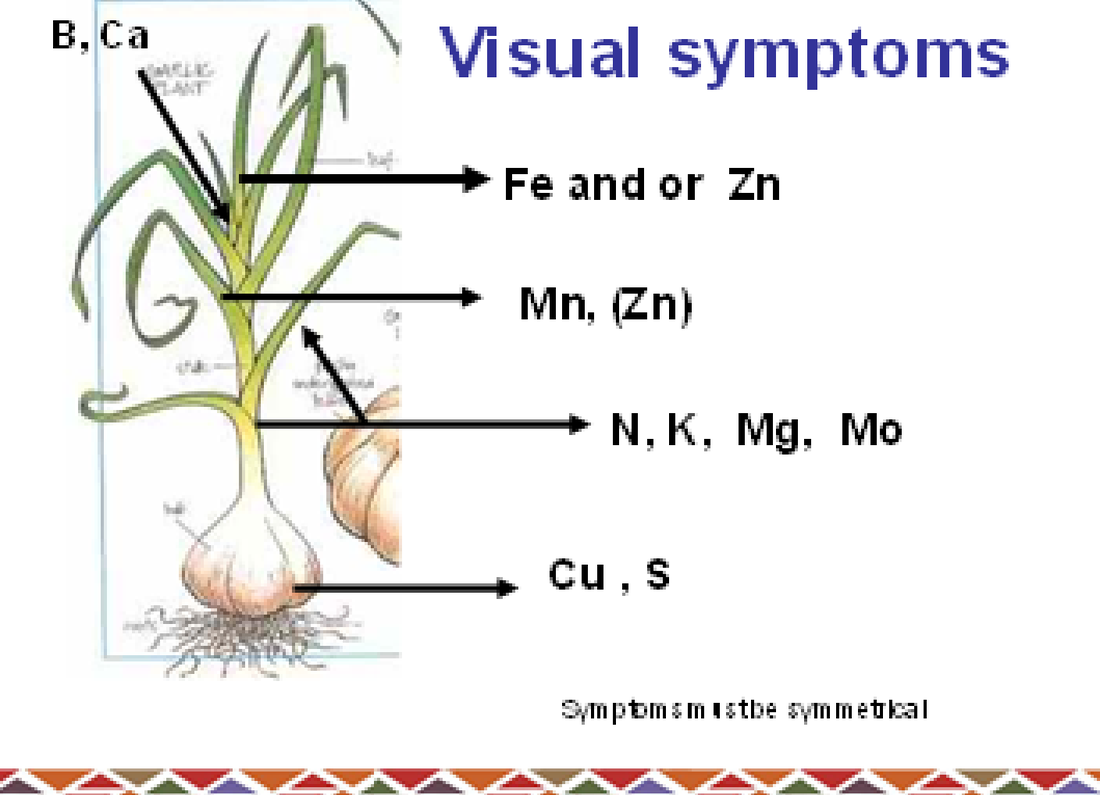
Visual symptoms – unfortunately, by the time you see a deficiency symptom, growth and production may have been compromised already.
Fig 4; illustration of nutrient deficiency symptoms occur in the crop. The position
C
Plant and soil analysis. This is one of the more accurate ways available to growers in predicting and determining nutrient problems.
4
Correcting deficiencies
The choice of application method of a nutrient is dependent on the nutrient that is deficient. It is more sensible to correct the macro and secondary nutrients with soil applications if the levels are low in the soil. Thereafter, foliar applications may be used as supplemental applications to carry the crop through a stress period where the plant cannot, for whatever reason, satisfy the demand for a specific nutrient during peak demand.
Micro-nutrients, required in small amounts, are often better suited for foliar applications as small quantities can be evenly applied at the correct time to coincide with periods of demand.
These days there are nutritional products suitable for use as seed dressing to assist in early establishment and growth of the seedling.
In Summary
Understanding the role of each essential nutrient can help a grower optimize his feeding program for the crop, limiting nutrient stress and thereby encouraging optimum growth, increasing disease resistance and achieving quality production.
Practical Guide to Garlic Pests, Diseases & Prevention
Garlic doesn’t “repel everything.” It can be hit by insects, mites, fungi, bacteria, nematodes, and even non-living problems like nutrient imbalances or heat stress. Knowing what to look for and how to react early saves your crop and your profit.
2
The Four Pillars of Healthy Garlic
Know the problems – Be aware of common pests, diseases and disorders.
Scout regularly – Walk your fields a few times a week; look above and below ground.
Apply the right fix correctly – Chemical, biological or cultural control—pick what’s appropriate, use the right tool at the right time.
Farm well (good “cultural practices”) – Balanced nutrition, good soil biology, correct irrigation and drainage, clean seed (cloves), and weed control.
3
Quick Scouting Checklist (8 Steps)
Detect: See something off? Spot it early.
Identify: Figure out what pest or problem it is.
Learn: Understand how it lives and spreads.
Is it worth treating? (Economic threshold).
Choose control methods (chemical, biological, cultural).
Plant clean, healthy cloves. Consider mulch after herbicide/cutworm treatments to retain moisture and
7
Records & Continuous Improvement
Keep a simple logbook or spreadsheet: scouting notes, problems found, what you did, and the outcome. Review after each season—what worked, what didn’t—and adjust.
8
Need advice?
For any further advice, feel free to contact Robert Pattison-Emms on +2782 891 8399.